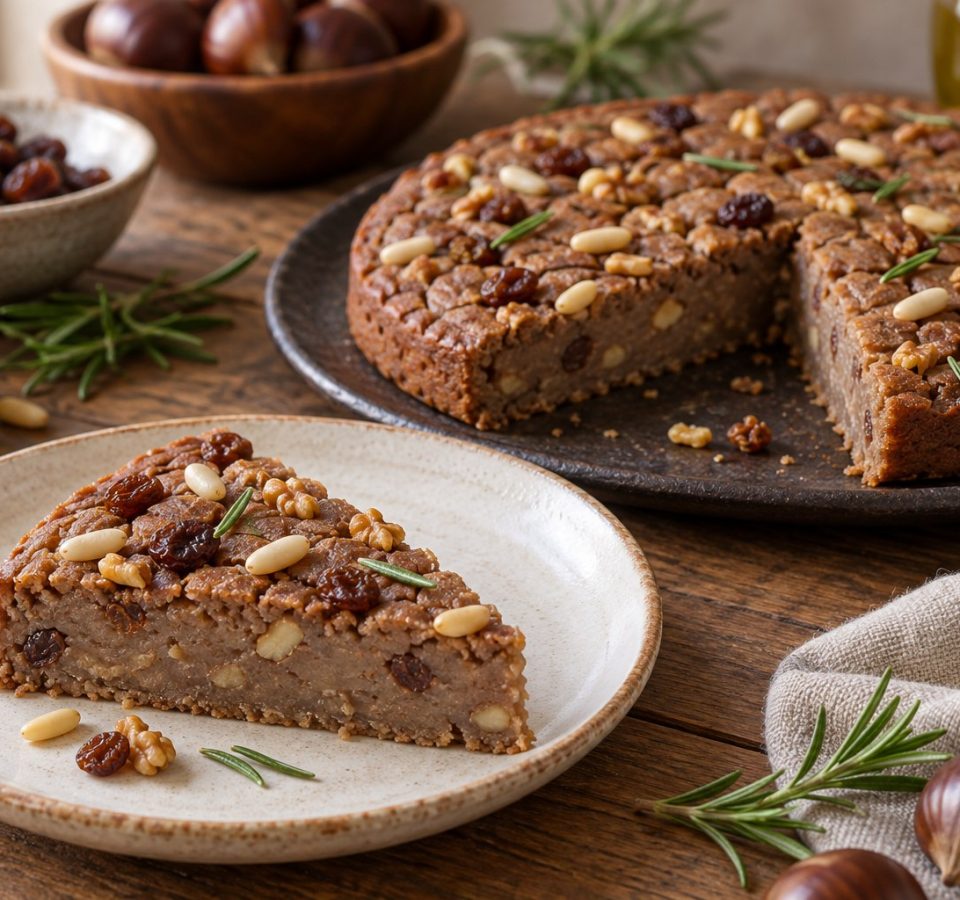
Castagnaccio is an autumn cake with an intense chestnut flavour and a dense texture. Walnuts, pine nuts and raisins enrich a simple mixture of chestnut flour and water, scented with rosemary. It needs no eggs, raising agent or wheat flour. Do not expect a tall, fluffy sponge: its character comes from its compact texture and the contrast with the nuts.
Preparation stated: 10 minutes · Soak the raisins: about 10 minutes · Bake: about 35 minutes at 190 °C in a preheated oven · 24 cm round tin. Let it cool slightly before serving.
Ingredients for a 24 cm tin
- 500 g chestnut flour
- 600 ml water
- 100 g walnut kernels
- 60 g pine nuts
- 60 g raisins
- 2 tablespoons extra virgin olive oil
- 1 pinch of salt
- Rosemary, as needed
Oil the tin as instructed. The source does not separate the oil used for greasing from the two tablespoons listed, so no additional measured quantity is invented here.
How to make castagnaccio
- Rinse the raisins and soak them in cold water for about 10 minutes. Drain and squeeze them well.
- Sift the chestnut flour into a bowl and add the salt. Gradually pour in the 600 ml of cold water, stirring with a hand whisk or spoon until no lumps remain.
- Chop the walnut kernels. Stir two thirds of the walnuts, two thirds of the pine nuts and all the drained raisins into the batter.
- Pour into an oiled 24 cm round tin. Scatter the remaining walnuts and pine nuts over the top, add the rosemary needles and drizzle with the oil.
- Bake in the preheated oven at 190 °C for about 35 minutes. Let it cool slightly before cutting. Serve warm or cold.
The history of castagnaccio
Castagnaccio belongs to rural cooking traditions built around chestnut flour. In Lunigiana, the chestnut tree was known as the bread tree: its fruit helped sustain local communities. Chestnuts were dried in buildings called gradili and then milled, allowing the harvest to be used beyond autumn.
Names and preparations vary by region. In Casentino, castagnaccio is also known as baldino; Visit Tuscany describes it with chestnut flour, extra virgin olive oil, pine nuts, raisins and rosemary. These sources explain the tradition without assigning this particular version an undocumented inventor or date of origin.
Frequently asked questions
Should castagnaccio rise?
No. This recipe has no raising agent and the batter is not whipped. The result is dense, unlike a fluffy cake.
Do I need to add sugar?
Sugar is not included in this formula. That does not mean the cake contains no naturally occurring sugars.
Is it the same as chestnut flour sponge cake?
No. This recipe uses water and chestnut flour, without eggs or a raising agent. The soft chestnut flour cake in the Magazine also contains wheat flour, eggs, milk and baking powder.
Recipe source and image
Rewritten from the supplied material, with reference to La cucina di Vane’s recipe. The owner clarified the source’s flour, walnut and herb errors: 500 g flour, 100 g walnut kernels and rosemary. All other amounts, the oven temperature and baking time are unchanged.
Castagnaccio — La cucina di Vane
The image is an AI-generated illustration and does not document a practical test of the recipe.