Sugar-free ice cream is a common search, but it does not automatically mean carbohydrate-free or suitable for everyone. First distinguish “sugar-free” from “no added sugar”.
“Sugar-free” and “no added sugar” are different claims
Under EU Regulation (EC) No 1924/2006, “sugar-free” may be used only when a product contains no more than 0.5 g sugars per 100 g or 100 ml. “No added sugar” is separate: no mono- or disaccharides or other foods used for sweetening may be added, and naturally occurring sugars must be disclosed.
What changes in preparation
Sugars contribute more than sweetness: they also affect ice-cream structure and texture. Reducing or replacing them therefore requires a complete formulation, not simply omitting one ingredient. Always follow the selected base label, method and dosage.
The Aromitalia formula, unchanged
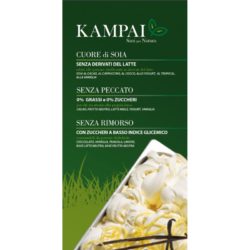
Official Aromitalia documentation identifies Base Frutta Neutra Senza Rimorso b.i.g., code 1146 for low-glycaemic-index ice cream. The manufacturer formula already present in this article remains unchanged: 980 g base + 2 L water + 800 g fruit.
This does not prove that the finished ice cream is “0% sugar”: fruit contains naturally occurring sugars and the final claim depends on the finished product values. The old .it shop link is obsolete. Browse the current gelato bases and neutral mixes separately, checking each product sheet because formulas and doses may differ.
Ice cream and diabetes: what to check
There is no ice-cream category that is universally suitable for everyone with diabetes. Official NIDDK and CDC guidance emphasises total carbohydrate, portion size and the individual plan agreed with a healthcare professional. Fructose or stevia alone does not automatically make a product sugar-free or guarantee the same glycaemic response for everyone.