Raw or undercooked eggs can carry Salmonella. For tiramisu, mousse, creams and other desserts that remain raw or undercooked, the safest practical choice is to use treated shell eggs or commercially pasteurized egg products.
Safety note: the traditional hot-syrup method below preserves the ingredients, quantities and sequence of the historical recipe. A syrup temperature of 121°C does not, by itself, prove that the entire egg mixture reached a validated time-temperature combination. USDA guidance states that egg mixtures should reach 71.1°C (160°F) and recommends pasteurized products for preparations served raw or undercooked.
Traditional hot-syrup method for desserts
The historical method treats whole eggs, yolks and whites separately. Use a reliable kitchen thermometer and handle boiling syrup with great care because it can cause serious burns.

Whole eggs: original quantities and method
For 3 whole eggs, use 150 g of sugar and 50 ml of water.
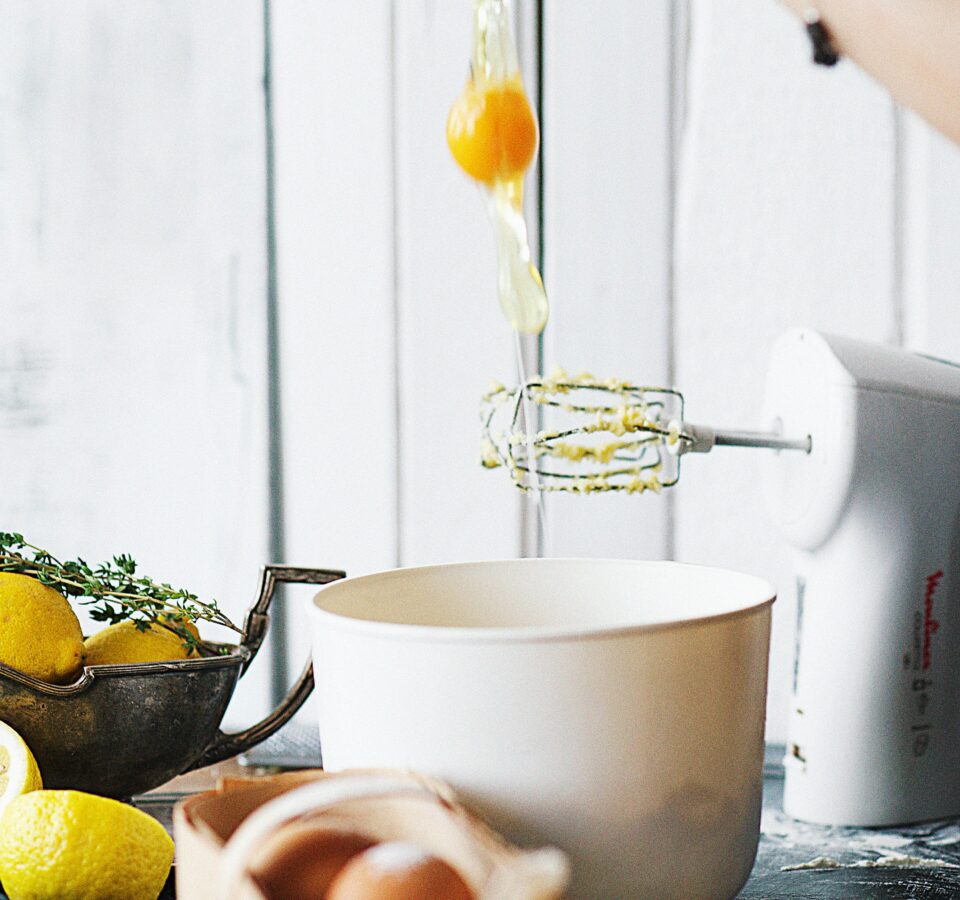
Place the eggs in a bowl with 50 g of sugar and begin whisking with an electric mixer.
Put 50 ml of water and the remaining 100 g of sugar in a saucepan and heat to make a syrup.
Bring the syrup to 121°C, checking it with a kitchen thermometer.
Pour it in a thin stream over the egg-and-sugar mixture while continuing to whisk until the mixture cools.
This method already uses 150 g of sugar, so subtract the same quantity from the sugar required by the final dessert recipe.
Egg yolks: original quantities and method
For 3 yolks, use 100 g of sugar and 25 ml of water.
Whisk the yolks with 50 g of sugar. Make the syrup with 25 ml of water and the remaining 50 g of sugar, bring it to 121°C, then pour it in slowly while continuing to whisk.
Egg whites: original quantities and method
Whisk the egg whites to stiff peaks. Make a syrup with 50 g of sugar and 25 ml of water, bring it to 121°C, then pour it in slowly while continuing to whisk.
When to choose commercially pasteurized eggs
If the dessert will not be cooked to a safe internal temperature, use eggs or egg products clearly labelled as pasteurized. USDA also notes that pasteurizing shell eggs at home is very difficult without cooking them. Keep ingredients and finished preparations refrigerated, prevent cross-contamination and follow the product instructions.
Food-safety sources: ISS — Salmonella; FDA — Egg Safety; USDA — egg recipe safety; USDA — home pasteurization of shell eggs.