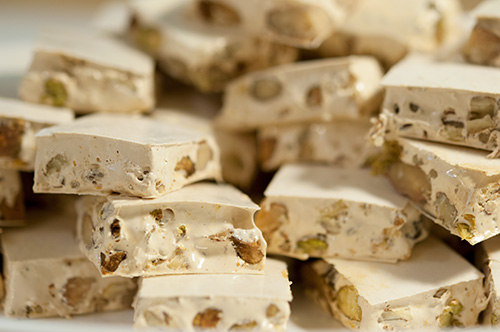
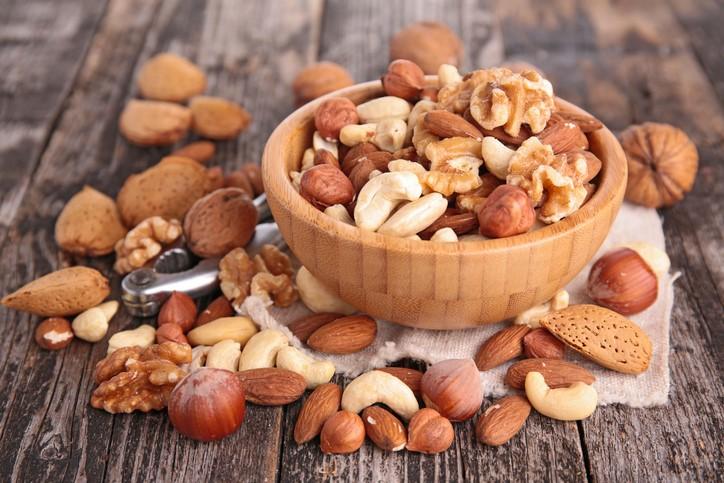
 The expression “dried fruit” is sometimes used loosely for very different foods. Walnuts, hazelnuts, almonds and pistachios are nuts, while figs, prunes, apricots and raisins are fruits from which part of the water has been removed.
The distinction matters in pastry because composition, texture, storage and use differ between the two groups. This guide explains how to identify, choose and use them without assigning therapeutic effects to a single food.
Nuts, dried fruit and candied fruit: the difference
Nuts include walnuts, hazelnuts, almonds, pistachios, cashews, pecans and pine nuts. Dried fruit includes figs, prunes, apricots, dates and grapes that have lost a substantial part of their water.
Candied fruit is a separate product preserved with added sugar. For techniques and storage, see our guide to candied fruit.
How to use nuts and dried fruit in pastry
Choose the format according to the preparation and the individual product sheet.
- Whole or sliced for decoration, inserts and finishing.
- Chopped for borders, coatings, pralines and crunchy layers.
- As flour for doughs, almond pastes and recipes that specifically call for it.
- Dried and diced for cakes, biscuits, enriched breads and fillings, checking moisture and added sugars.
- As paste or cream only when the recipe and label specify composition and dosage.
Where to buy nuts and dried fruit for baking
In the nuts and dried fruit for baking category you can compare the almonds, hazelnuts, pistachios, peanuts, coconut, raisins, flours and chopped products currently listed.
Before buying, check the exact name, ingredients, allergens, format, roasting, added sugar or salt, batch, best-before date and storage directions. Do not extend the features of one product to the whole category.
Nutrition and the reference portion
Nuts and dried fruit are not nutritionally equivalent. Nuts mainly provide fats, including unsaturated fats, together with other nutrients; when fruit is dried, sugars and other components become more concentrated by weight as water is removed.
The CREA dietary guidelines use 30 g as a reference portion for nuts and oilseeds. This is not a universal prescription or a dose for every person: frequency and quantity must be considered within the whole diet and individual needs.
Simply adding a few walnuts or almonds to an unbalanced diet does not by itself lower cholesterol. Personal dietary or clinical questions should be discussed with a qualified health professional.
 Types of dried fruit
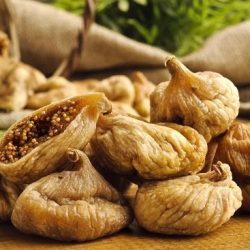 Types of dried fruit
- Dates
- Figs
- Apricots
- Raisins
- Prunes
- Mango
- Apples
- Pears
- Pineapple
- Blueberries
Always read the label: some products contain added sugar, oil or preservatives. Dried and fresh fruit are not automatically interchangeable because their water content, energy density and usual portions differ.
Types of nuts and oilseeds
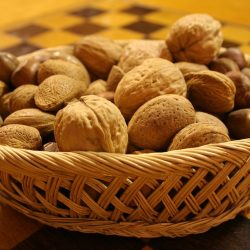 Types of nuts and oilseeds
- Almonds
- Hazelnuts
- Walnuts
- Pistachios
- Cashews
- Pecans
- Macadamias
- Brazil nuts
- Pine nuts
- Peanuts and oilseeds, botanically distinct but often used in the same pastry applications
For direct consumption, CREA advises choosing plain products where possible: salt, glazing and coatings change the product. In a recipe, follow the listed ingredient, quantity and intended function.
Choosing, allergens and storage
- Store as instructed by the producer, tightly closed and away from heat, light and moisture.
- Check smell, taste and appearance before use; fats in nuts can become rancid.
- Always verify allergens and possible cross-contamination on the specific label.
- Whole nuts may be a choking hazard for young children; follow age-appropriate health guidance.
- Do not use an ingredient if its label, batch or storage history is uncertain.