If you want neat shortcrust pastry cases for tarts, like those in a pastry shop, the trick is blind baking.
This baking technique can be used with sweet shortcrust pastry or pâte brisée. Both are rich in butter and tend to expand during baking.
Blind baking prevents this expansion, leaving a pastry case ready to fill with creams or fresh cream.
For blind baking, you will need baking beans or dried pulses.
Baking beans are ceramic or porcelain weights that fit the shape of the pastry case and provide the weight needed to hold it down.
Dried pulses are the traditional alternative: many households already have some, and they serve the same purpose as ceramic baking beans.
The dried pulses do not cook as they would in water, since they are not in contact with water.

How to blind bake a pastry case
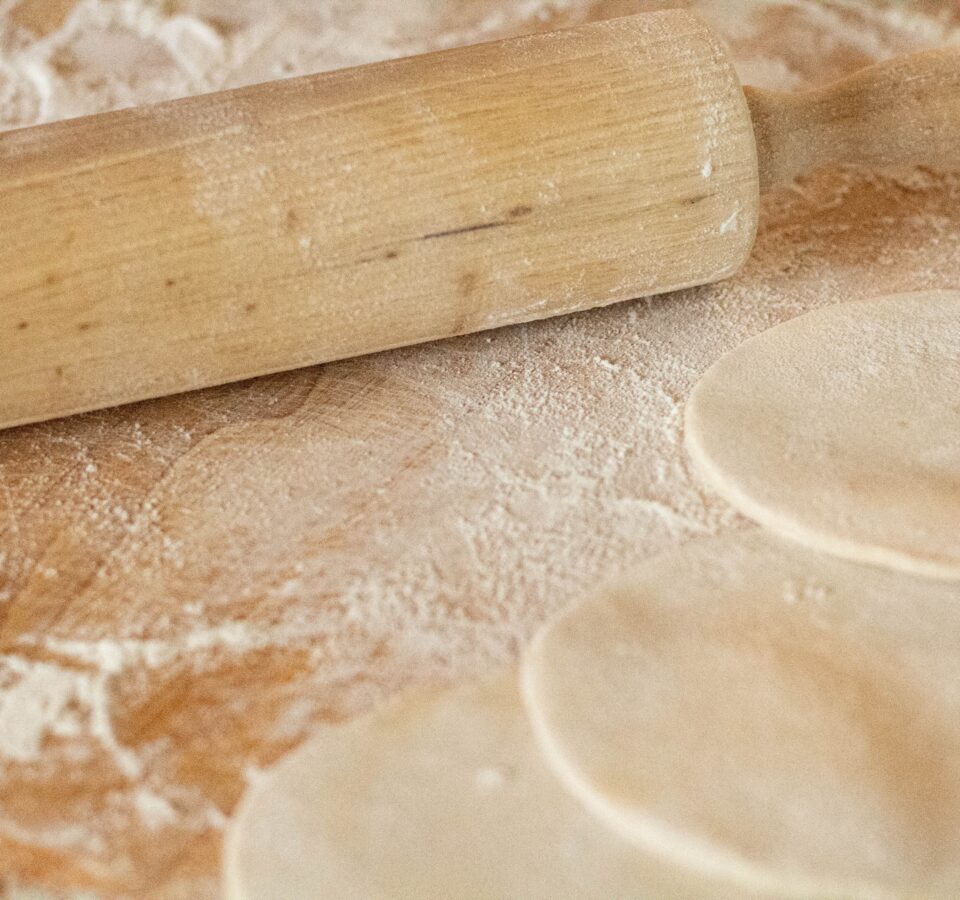
Start by rolling out the shortcrust pastry and placing it in a tart tin. Prick the pastry thoroughly with a fork to prevent bubbles from forming.
Take a sheet of baking paper large enough to cover the pastry base. Wet it briefly under running water, squeeze it out and dry it well with a tea towel so that it becomes soft and pliable.
Lay the baking paper over the pastry, fitting it closely to the base.
Pour in the baking beans or dried pulses. Use enough to fill the tin generously so that the pastry bakes evenly.
When baking is complete — normally half an hour at 180° for a shortcrust pastry case — carefully remove the baking beans and lift away the baking paper.
Your blind-baked shortcrust pastry case is ready to fill.